
Pioneering Space Exploration, Research, and Collaboration
Space exploration offers essential tools for life on Earth—fueling technological breakthroughs, enhancing environmental forecasting and disaster response, and expanding our understanding of the universe in ways that impact our planetary boundaries. From designing NASA’s artificial star to using satellite data for storm prediction, George Mason is driving shared scientific discovery, fostering international learning and cooperation, and building a future workforce capable of ensuring a vibrant and resilient life within a global infrastructure.
Grand Challenge Initiative
George Mason’s Grand Challenge Initiative is a university-wide collaboration addressing humanity’s most pressing challenges through six interlocking strategies, supported by a $15 million investment over five years.
On this page
THE GEORGE MASON ADVANTAGE
George Mason University is home to the $19.5 million Landolt NASA Space Mission that will put an artificial “star” in orbit around the Earth. This artificial star will allow scientists to calibrate telescopes and more accurately measure the brightness of stars ranging from those nearby to the distant explosions of supernova in far-off galaxies. By establishing absolute flux calibration, the mission will begin to address several open challenges in astrophysics including the speed and acceleration of the universe expansion. The mission is led by primary investigator Peter Plavchan, an associate professor in the Department of Physics and Astronomy in the College of Science, and Peter Pachowicz, an associate professor in the Department of Electrical and Computer Engineering in the College of Engineering and Computing.
George Mason's Landolt NASA Space Mission
RESEARCH IN ACTION

Landolt Mission, a NASA Pioneers Program Flight Project.
Evan Cantwell/Office of University Branding
George Mason University Space Center
This project will position the university as a leader in using space technology to solve real‑world problems. By designing and launching small satellites, the project will generate data that improve climate forecasting, disaster preparation, infrastructure protection, and scientific discovery. The new center will also expand degree programs, train students through hands‑on missions, and build partnerships with industry and government. Together, these efforts will strengthen Virginia’s space economy and prepare a diverse workforce for a rapidly growing sector.
Learn more about this project, the colleges involved, and the cross-disciplinary leadership team.

Animation courtesy of NASA’s Chandra X-ray Observatory illustrating the supernova studied in this research.
George Mason PhD student Jessye Gassel captures timelapse of a supernova
George Mason doctoral student Jessye Gassel led the creation of a 25-year timelapse of Kepler's Supernova Remnant using data from NASA's Chandra X-ray Observatory, presenting her findings at the 247th meeting of the American Astronomical Society. The remnant, the remains of a white dwarf star that exploded 400 years ago, is traveling at speeds up to 13.8 million miles per hour. Scientists use this type of supernova remnant to measure the rate of expansion of the universe.
A calibration from campus to the cosmos

College of Science. Photo by Ron Aira/Office of University Branding
George Mason is the home of the $20 million NASA Landolt Space Mission, which is placing a satellite that will serve as an artificial “star” in orbit around the Earth by 2029. Led by primary investigator Peter Plavchan, an associate professor of physics and astronomy, and Peter Pachowicz, associate professor in the Department of Electrical and Computer Engineering, George Mason engineering students are playing an instrumental role in the payload’s construction. It’s an experience that not only bolsters a student’s resume but also allows them to work on a project from the inception of the mission to the actual launch and operation of the science payload.
Graduate student Fatima Bahzad says, “It’s the most fun I’ve ever had in school.” Bahzad, a computer science major, is working on the communication of microchip that make up the artificial “star.” “The satellite is comprised of layers, and each layer has a chip. The chips need to talk to each other. There’s also a primary chip that sends commands to all of them.”
The payload is being built in partnership with the National Institute of Standards and Technology. The “star” will allow scientists to calibrate telescopes and more accurately measure the brightness of stars ranging from those nearby to the distant explosions of supernova in far-off galaxies. By establishing absolute flux calibration, the mission will address several open challenges in astrophysics, including the speed and acceleration of the universe expansion.
PhD student Jay Deorukhkar has been working on testing the individual payload modules. These will later integrate with the satellite bus, which is the core structure and support system that is separate from the specific payload. Reliability of small satellite buses against radiation effects is also the subject of his dissertation, making this work particularly relevant.
“My role as an engineer is to help design, prototype, and test specific payload components. We’re early in the design stage, working toward the preliminary design review of our payload,” he said.
STUDENT RESOURCES
The Small Satellite Engineering, Graduate Certificate
The Small Satellite Engineering, Graduate Certificate in the College of Engineering and Computing, prepares students for emerging roles in aerospace and defense.
PatriotAI
Schar School’s Introduction to Space Policy course explores how space systems are reshaping every sector of modern life—from national security to environmental science, global finance to digital infrastructure.
The Satellite and Earth Systems Studies (SESS)
The Satellite and Earth Systems Studies (SESS) Program in the College of Science helps enhance students’ understanding of how the natural components of the Earth system—atmosphere, ocean, land, and biosphere—interact with human activities as a coupled system.
FACULTY SPOTLIGHTS

An expert in data and computational science, Anamaria Berea, PhD, Computational Social Science ’12, has worked closely with NASA on a number of projects. Most recently, she was selected to serve on NASA's Decadal Astrobiology Research and Exploration Strategy (DARES) Task Force 1. This group of 13 scientists was charged with shaping the future of NASA’s astrobiology research over the following decade and guiding the development of NASA’s long-term strategy for exploring the origins, evolution, and distribution of life in the universe.

Michael Summers is a planetary scientist who has worked on NASA space missions that study the Earth from space shuttle and orbiting satellites, and that probe other planetary atmospheres using deep space robotic missions. He played a leading role in the New Horizons mission to Pluto and the Kuiper Belt.

Jeffrey Moran of the Department of Mechanical Engineering is working on an experiment to study thermophoresis, the movement of particles in both liquids and gases. Doing the experiment in space allows scientists to run their tests with a minimal influence of gravity, to purely examine the effect of temperature on aerosols without creating air currents.
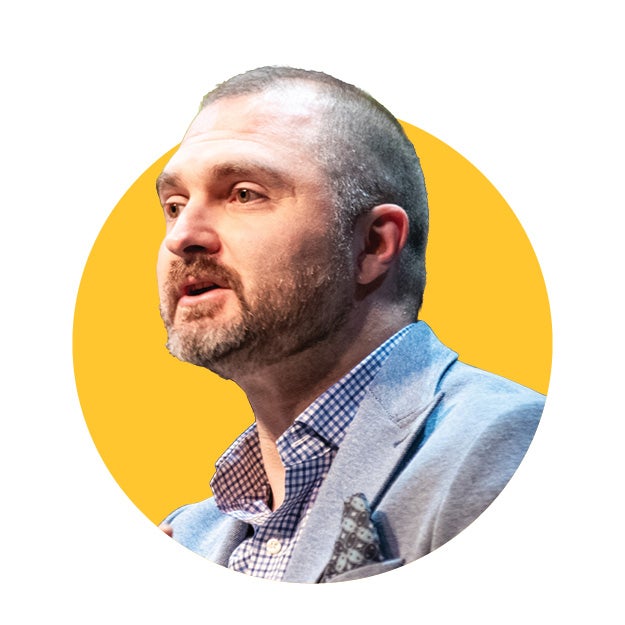
George Mason’s Mars expert Erdal Yiğit received the 2016 Zeldovich Medal for his contributions to the study of coupling between the lower and upper atmospheres on Earth and Mars by gravity waves.

PARTNERSHIPS AND COMMUNITY ENGAGEMENT
NASA Landolt Space Mission at George Mason
George Mason University leads the NASA-funded Landolt Space Mission—a $19.5 million project that will place an artificial “star” into orbit to calibrate telescopes and improve measurements of stellar brightness. In collaboration with NASA, the National Institute of Standards and Technology (NIST), and a consortium of research partners, Mason faculty and students advance astrophysics research and space innovation from mission design through orbit and data analysis.
Space Forward Frontiers Seminar with Northrop Grumman
In partnership with Northrop Grumman, George Mason launched the Space Forward Frontiers Seminar Series—an interdisciplinary program connecting students with industry leaders to explore space technology, policy, and innovation while strengthening workforce readiness and space-sector collaboration.
Learn more about the Space Forward Frontiers Seminar with Northrop Grumma
FUTURE-READY INFRASTRUCTURE
The George Mason Observatory
The George Mason Observatory, located on the Fairfax Campus, is a space where research, education, and public service come together under the stars. Operated by the Department of Physics and Astronomy, the observatory provides students and the community with unique opportunities to explore astronomy through hands-on experience with professional-grade equipment.
The CubeSat/SatCom Engineering Lab
The CubeSat/SatCom Engineering Lab, under director Peter Pachowicz, focuses on hands-on engineering of ultra-small CubeSats and satellite communications systems by combining research and educational objectives. Lab facilities include CubeSat Development and Testing Lab, SatCom Ground Station with VHF/UHF/S-band antenna system, and a Space Communication Station with a 9.1m satellite dish.
Nanofabrication Facility
The Nanofabrication Facility with its class 1000 clean room and characterization labs provides the tools necessary for photolithography, etching, and deposition processes essential for building microfluidics, micro- and nanoelectronics, and other devices.
Institute of Digital Innovation (IDIA)
The Institute of Digital Innovation, headquartered at Fuse at Mason Square, leads George Mason’s transdisciplinary research, innovation, and next-generation workforce development strategy for scaled sustainable growth in digital innovation.
PODCASTS
Podcasts
What are the chances of intelligent life beyond Earth?
Anamaria Berea, Computational and Data Sciences associate professor, was featured on George Mason's Access to Excellence podcast. In this episode, Berea discusses her research on Mars settlements and Unidentified Aerial Phenomena (UAP) as she and President Gregory Washington debate the question on everyone’s mind: Is there life beyond Earth?
NEWS
- May 6, 2026
- April 15, 2026
- February 13, 2026
- February 2, 2026
- August 15, 2025
EVENTS
Upcoming Events
George Mason Space Day — September 26, 2026
Join experts in astronomy and astrophysics, including keynote speaker Brigadier General Nick Hague of the U.S. Space Force, a former NASA astronaut with three spaceflights and 374 days in space.
Past Events
Space Forward Frontiers Seminar — Spring 2026
George Mason launched a seminar series with Northrop Grumman featuring weekly talks from faculty and industry leaders on space technology, policy, and emerging challenges, open to students of all majors.
SpaceNEXT — February 18-20, 2026
A global forum in Tysons bringing together leaders from industry, government, academia, and investment. George Mason served as the lead academic partner, shaping national and global space strategies and connecting students to internships, research, and careers in the space economy.